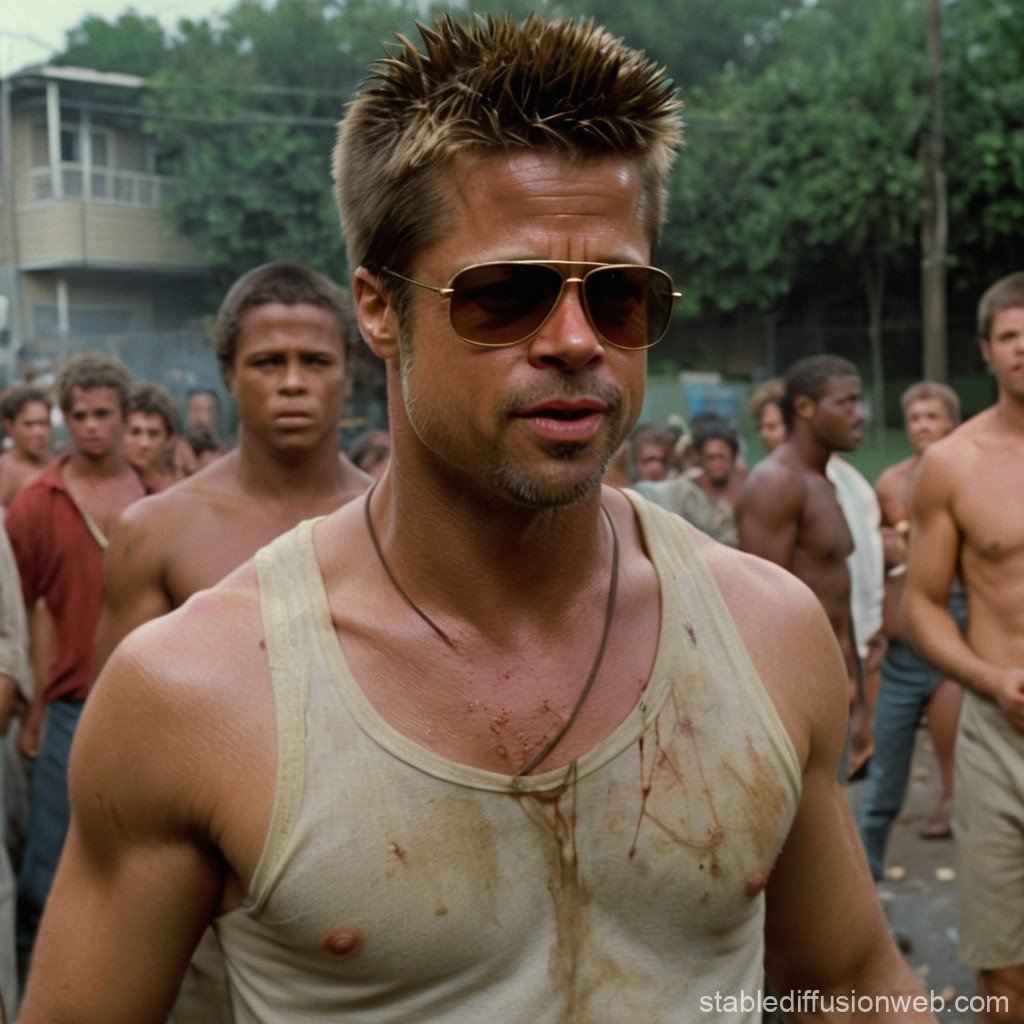
When we talk about method acting, many stories circulate, but few capture the sheer, unsettling commitment quite like Brad Pitt's preparation and acting techniques for Tyler Durden in Fight Club. It wasn't just about learning lines or hitting marks; it was a total immersion, a physical and psychological transformation that birthed one of cinema's most iconic and disturbing characters.
Imagine an actor so dedicated to embodying a role that he willingly alters his own appearance, not with makeup, but through a genuine physical change. That's where Pitt began, chipping his own front teeth to look like a true street brawler – a visceral commitment revealed in a 1998 article, setting the stage for a character steeped in toxic masculinity and raw authenticity. But that was just the beginning of a profound journey into the mind of an anti-establishment icon.
At a Glance: Brad Pitt's Tyler Durden Transformation
- Physical Extremism: Chipped his own front teeth for a "street brawler" look.
- Rigorous Training: Demanding six-day-a-week regimen of high-intensity weights, cardio, and martial arts drills.
- Strict Diet: Low-carb, lean protein, and vegetable focus for a lean, defined physique.
- Mental Immersion: Deep dive into chaos, nihilism, anti-establishment, and anti-consumerism.
- Identity Detachment: Consciously detached from his own persona to adopt Tyler's rebellious, emotionally detached outlook.
- Authentic Violence: Engaged in sparring and simulated real violence, risking minor injuries for realism.
- Result: A raw, visceral, and unforgettable portrayal that cemented Tyler Durden's place in cinematic history.
The Unconventional Spark: Why Tyler Durden Demanded More
Tyler Durden isn't your average movie character. He's a projection, an id, a charismatic anarchist who preaches liberation through destruction. To play such a figure required an actor to go beyond surface-level portrayal. Brad Pitt understood that Tyler needed to be more than just a cool façade; he had to feel dangerous, alluring, and terrifyingly real.
The director, David Fincher, is known for his exacting standards, and Fincher's meticulous directing style undoubtedly pushed Pitt to explore every facet of this complex character. From the outset, the role was a challenge to the traditional Hollywood leading man archetype, demanding a complete dissolution of ego and a willingness to embrace the uncomfortable. This wasn't a role for the faint of heart, or for actors unwilling to truly suffer for their art. Pitt, it seems, was more than ready to answer that call.
The Physical Metamorphosis: Crafting a Demigod of Destruction
One of the most striking aspects of Tyler Durden is his physical presence. He's not just fit; he's wiry, menacing, and looks like he could handle himself in any back alley brawl. This wasn't achieved through special effects, but through an incredible dedication to physical transformation.
The Chipped Tooth: A Visible Vow of Authenticity
Let's start with the most extreme example of Pitt's commitment: his teeth. Brad Pitt, a Hollywood heartthrob known for his perfect smile, had his front teeth intentionally chipped for the role. This wasn't a stunt; it was a deliberate choice to immediately convey Tyler's streetwise, unpolished nature. The imperfection immediately disarms the audience, suggesting a past filled with scrapes and fights, grounding the character in a gritty reality from his very first appearance. It's a testament to his dedication, prioritizing character authenticity over conventional attractiveness. This single detail speaks volumes about his approach: no holds barred for Tyler.
Diet and Training: Sculpting the Anti-Hero
To achieve Tyler's famously lean and defined physique, Pitt embarked on a grueling physical regimen. This wasn't about bulky muscles; it was about functional strength and a low body fat percentage that gave Tyler an almost predatory leanness.
You'd be looking at a six-day-a-week training schedule, a punishing mix of high-intensity weight training targeting specific muscle groups, alongside extensive cardio. Imagine pushing your body to its limits, day in and day out, not just to look good, but to embody a character who lives on the fringes. Complementing this was a strict low-carb diet, emphasizing lean proteins and a bounty of vegetables. Every meal, every rep, was a step towards becoming Tyler Durden, a man forged in the crucible of urban decay and personal rebellion. This intense focus on physical conditioning wasn't just aesthetic; it was about building the physical endurance and mental fortitude necessary for Tyler's chaotic lifestyle and relentless energy.
Mastering the Mayhem: Fight Choreography & Realism
Tyler Durden is a brawler, a leader of an underground fight club. For the fight scenes to feel authentic, Pitt couldn't just "act" like he could fight; he had to be able to fight. This involved extensive martial arts drills, strength training, and sparring sessions.
The goal wasn't just perfectly choreographed moves, but a raw, visceral quality that felt genuinely dangerous. Pitt, along with Edward Norton, reportedly risked minor injuries during these scenes, fully immersing themselves in the simulated violence. This dedication meant that when you saw Tyler in the ring, you believed he was a force to be reckoned with, capable of dishing out and taking punishment. This physicality, combined with the electrifying chemistry between Pitt and Edward Norton, made the fight sequences not just action, but critical character development.
Diving into the Abyss: Pitt's Psychological Immersion
Beyond the physical, Pitt's most profound work lay in his psychological immersion into Tyler's twisted worldview. This wasn't about sympathetic understanding, but a deep exploration of the character's motivations, however dark or nihilistic they might be.
Embracing Chaos and Nihilism
Tyler Durden is a mouthpiece for a generation's disillusionment, railing against consumerism, corporate life, and societal norms. Pitt had to truly inhabit this mindset. His preparation involved immersing himself in themes of chaos, anti-establishment rhetoric, nihilism, and anti-consumerism. This wasn't just intellectual study; it was about allowing these concepts to seep into his consciousness, to understand the emotional landscape of someone who rejects polite society.
To effectively portray Tyler Durden's most impactful quotes, Pitt had to internalize the philosophy behind them. He needed to understand the appeal of breaking free from the shackles of modern life, even if it led to destruction. This mental deep dive allowed him to deliver lines not as an actor, but as a prophet of discord.
Detaching from Self: Becoming the Id
Perhaps the most challenging aspect was detaching from his own identity. For an actor, this means setting aside personal beliefs, values, and even mannerisms to fully adopt another persona. For Tyler, this meant embracing a rebellious outlook and profound emotional detachment. Pitt had to tap into an almost primal, id-like state, shedding the layers of conventional self to become the uninhibited, impulsive force that is Tyler Durden.
This psychological stripping away allowed him to embody Tyler's absolute confidence, his lack of fear, and his chilling disregard for consequences. It's the kind of performance that makes you question where the actor ends and the character begins, a true testament to his commitment.
The Voice and Demeanor: Externalizing Inner Turmoil
Think about Tyler Durden's voice – it's often a low growl, an almost conspiratorial whisper, or a commanding bark. His demeanor shifts from playfully mischievous to intensely menacing in an instant. Pitt worked tirelessly on these external manifestations of Tyler's internal chaos.
Every smirk, every shrug, every intense gaze was carefully calibrated to convey Tyler's anarchic spirit. He wasn't just speaking lines; he was embodying a philosophy through his posture, his eye contact, and the rhythm of his speech. This attention to detail ensured that Tyler's presence was always felt, even when he was just silently observing, a true masterclass in non-verbal communication.
Acting Techniques: The Nuances of a Radical Performance
Pitt's performance as Tyler Durden isn't just about commitment; it's about the sophisticated acting choices that elevate him beyond a mere caricature.
Subtlety in Extremity: Communicating Paradox
Tyler Durden is an extreme character, but Pitt brought layers of subtlety to his portrayal. He understood that Tyler's charm lay in his paradoxes: he's both a guru and a destroyer, an enlightened being and a dangerous cult leader. Pitt managed to convey these conflicting traits simultaneously, never allowing Tyler to become one-dimensional.
He often used small gestures, a knowing look, or a slight shift in tone to hint at Tyler's deeper manipulations or philosophical underpinnings. This blend of overt rebelliousness with nuanced psychological depth is what makes the character so compelling and enduring. It's a performance that invites endless analysis, revealing something new with each viewing.
The Dance of Duality: Interplay with the Narrator
A crucial element of Pitt's performance was his dynamic with Edward Norton's Narrator. Tyler Durden is, after all, an alter ego, a projection of the Narrator's repressed desires and frustrations. Pitt had to play Tyler not just as a standalone character, but as a twisted reflection, an idealized (and dangerous) version of what the Narrator wanted to be.
This required a profound understanding of their relationship, anticipating the Narrator's reactions and playing off them. The synergy between the two actors created an incredible on-screen tension, making their scenes together electric. It’s impossible to discuss Tyler without considering his symbiotic relationship with the Narrator, a relationship Pitt had to construct and maintain with meticulous care.
Improvisation and Instinct: Living in the Moment
While Fincher's sets are known for their precision, there's always room for actors to bring their own instincts to a role, especially one as volatile as Tyler. Pitt's ability to live in the moment, to react authentically within Tyler's framework, added an unpredictable edge to the performance.
You can sense moments where Pitt is fully inhabiting Tyler, allowing the character's impulsive nature to dictate his actions. This level of immersion suggests a trust in his preparation, allowing him to be spontaneous while remaining true to Tyler's core essence. Anecdotes from behind-the-scenes stories from Fight Club's production often highlight the creative, collaborative environment that allowed for such powerful performances.
The Enduring Legacy: Why It Matters
Brad Pitt's portrayal of Tyler Durden is more than just a memorable performance; it's a cultural touchstone. His preparation, from the chipped tooth to the psychological deep dive, resulted in a character that resonates deeply with audiences, sparking discussions about consumerism, identity, and rebellion that continue to this day.
Tyler Durden became an icon of toxic masculinity and anti-establishmentarianism, a testament to Pitt's fearless embrace of a morally ambiguous character. The raw authenticity of his performance elevated the film's authenticity, making the anarchic world of Fight Club feel disturbingly real. It solidified Pitt's reputation not just as a leading man, but as a serious, transformative actor willing to push boundaries.
Beyond the Screen: Lessons in Commitment
What can we take away from Brad Pitt's preparation for Tyler Durden? It's a masterclass in commitment, illustrating that true transformation for a role goes far beyond superficial changes. It demands:
- Extreme Authenticity: Being willing to make uncomfortable, even permanent, changes for the sake of the character.
- Holistic Immersion: Addressing both the physical and psychological dimensions of a role, understanding that they are intertwined.
- Intellectual Rigor: Diving deep into the character's philosophy and worldview, even if it challenges your own.
- Relentless Dedication: Sticking to demanding routines, whether physical or mental, for the duration of the project.
- Collaborative Spirit: Working closely with directors and co-stars to build a cohesive and powerful narrative.
Pitt's work on Fight Club stands as a benchmark for what's possible when an actor fully dedicates themselves to a role. It reminds us that sometimes, to truly inhabit a character, you have to let parts of yourself go, or at least challenge them, and dive headfirst into the unknown. If you're curious about Brad Pitt's own reflections on Fight Club and its impact on him, it offers further insight into this incredible journey. This isn't just acting; it's a testament to the transformative power of art, and the lengths one artist will go to capture the very essence of a disruptive idea, cementing the deeper philosophical themes of Fight Club into cinematic history.