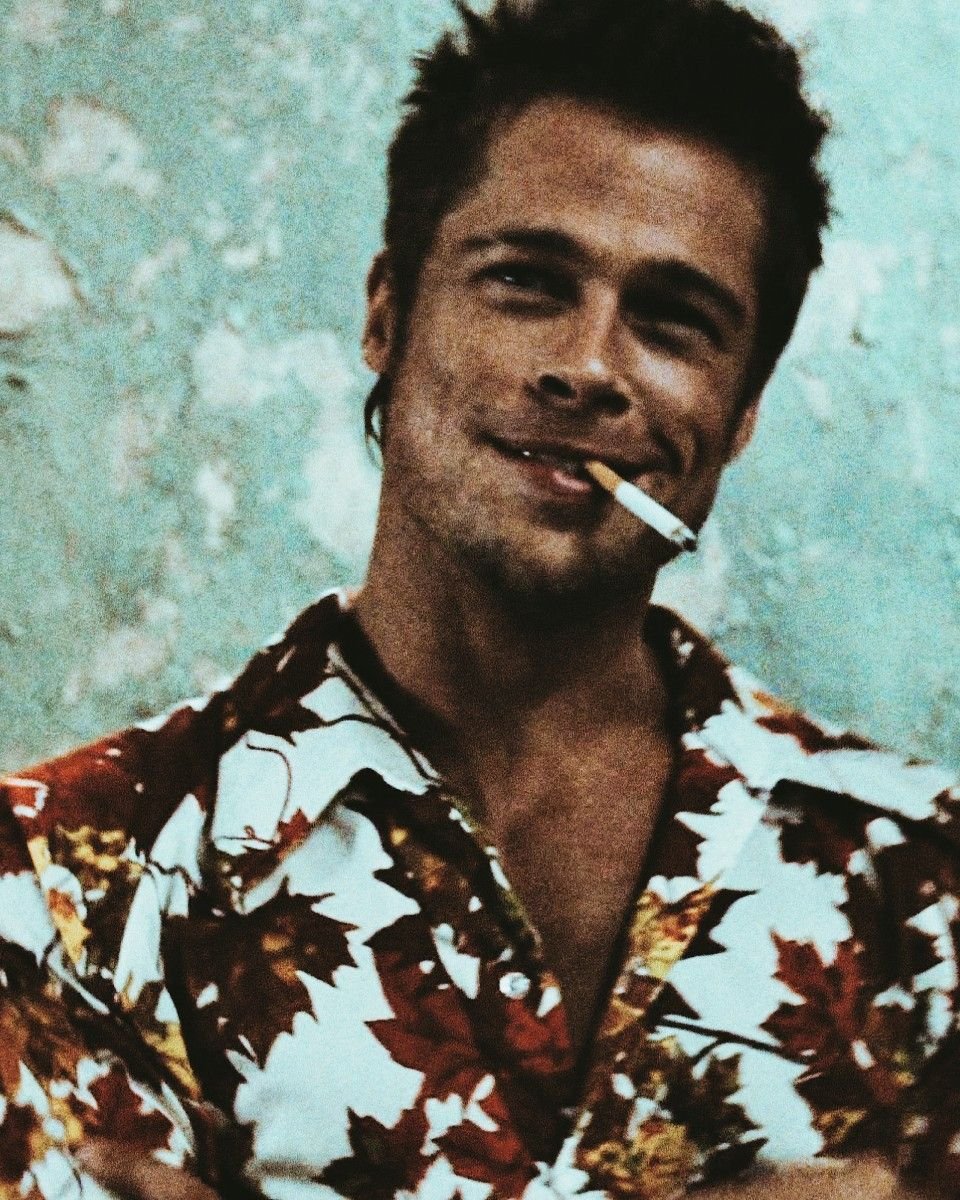
Tyler Durden. The name alone conjures images of chaotic charisma, unsettling philosophy, and a raw, untamed masculinity that burned itself into the collective cinematic consciousness. For many, Brad Pitt’s portrayal of Tyler Durden in David Fincher’s 1999 cult classic Fight Club isn't just a role; it’s an event, a cultural touchstone that redefined an era’s anxieties and aspirations. But what truly went into crafting this iconic character? And more importantly, what are Brad Pitt's own reflections on playing Tyler Durden in Fight Club – the choices he made, the lengths he went to, and what he ultimately understood about this enigmatic force?
While Pitt is not always one to overtly dissect his process in lengthy monologues, his actions and the profound impact of his performance speak volumes. They offer a unique window into an actor’s deep dive, a commitment so intense it blurs the lines between performer and persona. This isn't just about showing up on set; it's about embodying a philosophy, chipping away at vanity, and ultimately, becoming the very embodiment of a societal id.
At a Glance: Brad Pitt's Tyler Durden Deep Dive
- Extreme Commitment: Pitt famously had his own front teeth chipped to achieve Tyler Durden’s rugged, street-brawler look, a testament to his dedication.
- Embodying the Anti-Hero: His portrayal went beyond superficial cool, capturing the essence of toxic masculinity and rebellion central to Fight Club.
- Psychological Nuance: Pitt subtly played Tyler as both a charismatic liberator and a dangerous, destructive manifestation of the narrator’s psyche.
- Career-Defining Role: Durden cemented Pitt’s status as a versatile actor willing to push boundaries, moving beyond his "heartthrob" image.
- Lasting Impact: The character and Pitt's performance continue to spark discussion about consumerism, identity, and the allure of anarchy.
The Iconoclast's Canvas: Why Tyler Durden Still Resonates
Twenty-five years after its initial, somewhat controversial release, Fight Club remains a cinematic lightning rod. It’s a film that demands discussion, provokes thought, and, thanks in no small part to Brad Pitt, presents a character so magnetic, so unsettling, that he’s become ingrained in pop culture. Tyler Durden isn't just a character; he's an archetype. He's the id unleashed, the consumerist nightmare personified, and the chaotic whisper in the ear of anyone feeling suffocated by modern life.
Pitt’s Durden is a paradox: handsome yet menacing, philosophical yet primal, a guiding light who ultimately leads to destruction. This intricate balance is where Pitt’s genius truly shone. He didn't just play a cool guy; he played an idea, a psychological construct designed to dismantle the narrator's (and arguably, the audience's) conventional existence. To truly understand Brad Pitt's reflections on this role, we must look beyond interviews and into the choices he made, both physical and performative, that brought Tyler so vividly to life.
Beyond the Pretty Face: Pitt's Radical Commitment to Durden
Brad Pitt was already a bona fide movie star, often celebrated for his striking good looks, when he took on Fight Club. He was, in many ways, the poster child for the very consumerist ideals Tyler Durden vehemently railed against. This presented a unique challenge: how does a globally recognized heartthrob embody a grimy, anarchic soap salesman who lives on the fringes? Pitt's answer was radical, unflinching, and perhaps, his most profound reflection on the character's essence: he literally transformed himself, not just through costume, but through physical alteration.
The Method and the Message: Deconstructing Durden's Look
Imagine an actor, at the peak of his commercial appeal, willingly altering his appearance in a way that goes against every Hollywood standard of beauty. That's exactly what Pitt did. To achieve Tyler Durden's street-hardened, perpetually-in-a-brawl look, Pitt didn't rely solely on makeup or CGI. He went to his dentist and had parts of his front teeth chipped off.
This wasn't a temporary prosthetic or a clever camera trick; this was a deliberate, irreversible (at least temporarily) modification to his famous smile. This detail, revealed in a 1998 article shortly before the film's release, sent shockwaves through the industry and served as an immediate, visceral declaration of Pitt's commitment. It wasn't just about looking the part; it was about feeling the part, understanding the physical toll of Tyler's lifestyle, and embracing the imperfect, broken aesthetic that defined him.
A Chipped Tooth, a Shattered Ideal: The Symbolism of Sacrifice
This act of self-mutilation for the sake of art is more than just a testament to method acting; it’s a direct reflection of Tyler Durden’s core philosophy. Tyler is about stripping away the superficial, shattering societal norms, and embracing a raw, often violent, authenticity. What better way for the actor playing him to embody this than by deliberately defacing the very feature that epitomized his Hollywood glamour?
The chipped teeth weren't strictly necessary for the plot, but they made Tyler's persona undeniably more convincing. They hammered home the idea that this wasn't a pristine, manufactured rebel; this was someone who had lived hard, fought harder, and bore the scars to prove it. For Pitt, it was an immersion that went beyond dialogue and blocking. It was an internalizing of Tyler's anti-establishment ethos, manifesting physically. It demonstrated an incredible level of dedication to a character that aimed to smash consumer ideals, starting with the actor’s own perceived "perfect" image. This willingness to sacrifice his "pearly whites" for an extended period, knowing they could be repaired later, underscored the extremes men might go to express a particular brand of masculinity—a central theme of Fight Club.
This deep dive into the character’s physicality isn't just a fascinating anecdote; it's a cornerstone of Brad Pitt's take on Fight Club as a whole. It shows how profoundly he understood the character's rejection of manufactured perfection.
Peeling Back the Layers: Tyler as the Unconscious Id
Tyler Durden isn't merely a friend or an accomplice; he's a manifestation, a physical embodiment of the narrator’s suppressed desires, anxieties, and frustrations. Pitt’s performance, therefore, had to operate on multiple levels, making Tyler a charismatic leader for the Fight Club members while subtly hinting at his true, imaginary nature to the astute viewer.
The Mirror Image: Tyler and the Narrator's Shared Reality
From their very first interaction on a plane, where the narrator remarks, "We have the exact same briefcase," there are clues to Tyler’s true identity. Pitt's smirk in response isn't just a casual gesture; it’s a knowing acknowledgment that of course they have the same briefcase – because they are, in essence, the same person. This kind of subtle acting, embedded throughout the film, showcases Pitt’s understanding of Tyler as an extension of the narrator’s psyche. He's not just a character; he's the narrator's idealized self, a figment of imagination designed to push him towards self-realization.
Tyler Durden represents "all the ways you wish you could be," as he eventually tells the narrator. Pitt played this aspirational quality with a dangerous charm. He made Tyler alluring, a fantasy figure capable of shattering the mundane. This required Pitt to embody not just a person, but an entire worldview – a radical rejection of "things" in favor of experiences, even if those experiences were violent and destructive.
The Anarchist Philosopher: Tyler's Provocations
Tyler Durden's dialogue is packed with subversive philosophy, a relentless critique of consumerism and modern masculinity. Pitt delivered these lines with a captivating blend of nonchalance and conviction. When the narrator uses sarcasm as a defense mechanism, Tyler immediately cuts through it: "How's that working out for you? […] Being clever?" Pitt's delivery here isn't just dismissive; it's a direct challenge to the narrator’s (and the audience’s) complacency. He acts as the narrator’s conscience, albeit a chaotic one, forcing him to be "more honest and real with himself."
Pitt's understanding was that Tyler's purpose wasn't just to fight; it was to provoke, to shatter illusions, and to awaken a primal sense of self. He had to be persuasive enough for others to follow him blindly, even as his plans spiraled into outright terrorism. This dual nature – the inspiring leader and the destructive force – was perfectly balanced in Pitt’s performance.
The Craft of Deception: Pitt's Subtle Cues and Subliminal Hints
One of the most brilliant aspects of Fight Club is its intricate use of foreshadowing, tricking the audience into not realizing Tyler’s true identity until the climactic reveal. Brad Pitt was integral to this cinematic deception, weaving in subtle cues that, upon re-watching, make the twist feel inevitable.
A Masterclass in Foreshadowing: Playing Both Sides
Before we even "officially" meet Tyler on the plane, he appears in a series of subliminal flashes – near a copier, behind a doctor. These blink-and-you'll-miss-it appearances are the film's first clue that Tyler isn't quite real. Pitt had to perform these brief moments with an almost spectral quality, fleeting yet impactful enough to register subconsciously. It speaks to his deep understanding of Fincher's vision for the character as an internal presence rather than an external one.
Later, Tyler’s job as a projectionist becomes a meta-commentary on his role in the film's narrative. Tyler explains: "Someone has to be there to switch the projectors at the exact moment that one reel ends and the next reel begins…" This line, delivered by Pitt, is a wink to the audience, a hint that Tyler himself is controlling the narrative, sending "subliminal hints and tricking us, through the storytelling, into not realizing that he and the narrator are the same person until the end." Pitt played this role not just as a character, but as a puppeteer, subtly manipulating both the narrator and the audience.
The Escalation of Intensity: From Liberator to Extremist
As the film progresses and Tyler’s plans become increasingly radical, Pitt’s performance mirrors this escalation. He starts as a charming guide, blowing up the narrator’s apartment (which means he blew up his own apartment) to force them to "move in together" (i.e., move in with himself). This seemingly liberating act soon spirals into Project Mayhem, with Tyler orchestrating widespread destruction. Pitt had to calibrate Tyler’s charisma carefully, ensuring he remained compelling even as his actions grew more disturbing.
This careful calibration of escalating menace is another insight into Pitt's thoughtful approach. He understood that Tyler couldn't simply be evil from the start; his progression had to feel organic, a natural (albeit warped) extension of his initial philosophy of tearing down the old to build something new.
When the Lines Blur: Tyler's Transformation into Antagonist
The genius of Tyler Durden, and Pitt's portrayal, lies in his metamorphosis from a liberating figure to an outright antagonist. When the narrator realizes the full scope of Tyler's plans—to blow up buildings—it becomes "too far." At this point, the film shifts from "Man vs. Society" to the purest, most "wacked-out" form of "Man vs. Himself."
The Peril of Pure Id: When Freedom Becomes Fanaticism
Once the narrator uncovers the truth of their shared identity, Pitt's Tyler undergoes a visual and behavioral transformation. He appears with a shaved head, the infamous chipped tooth more prominent, and often draped in a fur coat – a look that screams wild, untamed, and increasingly unhinged. This isn’t just a stylistic choice; it's Pitt’s visual cue to the audience that Tyler has shed any pretense of being a 'normal' guiding force and has fully embraced his role as the narrator's chaotic id, now unleashed and out of control.
Pitt masterfully conveyed the shift from Tyler being the solution to becoming the ultimate problem. He had to portray Tyler as more maniacal, more dangerous, but still rooted in the same philosophical underpinnings. The difference was the scale of his ambition and the narrator’s dawning realization of its nihilistic endpoint. Pitt showed us Tyler not as a fixed entity, but as a fluid, evolving force of nature, reflecting the narrator's internal conflict.
The Internal War: Man vs. Himself
The confrontation between Tyler and the narrator becomes a literal internal battle, culminating in the narrator putting a gun in his own mouth and pulling the trigger to "kill" Tyler. Pitt’s performance in these final scenes is harrowing, portraying Tyler's desperation, anger, and unwavering belief in his destructive mission. Even in his "death," there’s a lingering question: is Tyler truly gone, or does he still live somewhere deep inside Jack, the narrator, a testament to the enduring power of the darker parts of our psyche?
Pitt’s ability to imbue Tyler with such a potent, undeniable presence, even as a figment of imagination, is what makes the character so enduring. He created someone who felt real, whose convictions were tangible, and whose influence was profound. This ability to make the abstract concrete is a hallmark of truly great acting.
Pitt's Enduring Legacy: Why Durden Remains a Career-Defining Role
More than two decades later, Tyler Durden remains one of Brad Pitt's most talked-about and critically acclaimed roles. It's a character that allowed him to break free from conventional leading man tropes and delve into something far more complex, dangerous, and psychologically rich. His choices, particularly the extreme physical commitment, demonstrated an actor willing to push boundaries and prioritize artistic integrity over personal vanity.
Tyler Durden didn’t just define Fight Club; it defined a significant chapter in Brad Pitt’s career, proving his range and fearlessness. It showcased his ability to inhabit characters that are both deeply flawed and incredibly compelling, characters who force audiences to confront uncomfortable truths about themselves and society.
Frequently Asked Questions About Brad Pitt and Tyler Durden
Is Brad Pitt's commitment to Tyler Durden considered method acting?
Yes, Brad Pitt's decision to have his front teeth chipped for the role is widely considered an extreme example of method acting. This approach involves actors deeply immersing themselves in their characters, often adopting their physical and psychological traits to achieve a more authentic performance. Pitt's choice went beyond typical character preparation, demonstrating a profound commitment to embodying Tyler Durden's rugged and rebellious essence.
Why did Tyler Durden chip his teeth in Fight Club?
While the character of Tyler Durden doesn't explicitly state why he has chipped teeth within the film's narrative, Brad Pitt chose to physically chip his own teeth for the role. This was a deliberate artistic decision to make Tyler look like a "true street brawler" and enhance his rugged, anti-establishment appearance. It symbolized his character's rejection of societal norms and perfect facades, reinforcing the film's themes of raw authenticity and rebellion.
What was Tyler Durden's purpose in the film?
Tyler Durden serves as the unnamed narrator's imaginary alter ego, conceived to help him escape his mundane, consumerist life and confront his inner frustrations. His purpose is to challenge the narrator's conventional existence, provoke him into radical self-discovery, and ultimately dismantle the superficial aspects of modern society. He embodies the narrator's suppressed desires for freedom, chaos, and a more authentic, albeit destructive, form of masculinity.
Did Brad Pitt really enjoy playing Tyler Durden?
While Brad Pitt rarely provides explicit "enjoyment ratings" for his roles, his extraordinary commitment, particularly the physical transformation of chipping his teeth, strongly suggests a deep engagement and satisfaction with the character. Actors often relish complex, challenging roles that allow them to explore different facets of human nature. The lasting impact and critical acclaim of his performance indicate that playing Tyler Durden was a profoundly rewarding and significant experience for Pitt as an artist.
Embodying the Anti-Hero: The Lasting Echoes of Tyler Durden
Brad Pitt's reflections on playing Tyler Durden are less about spoken words and more about indelible actions. His commitment to chipping his own teeth, his nuanced portrayal of a character who is both a savior and a destructor, and his ability to embody an entire philosophy speak volumes. He understood that Tyler Durden wasn't just a role; he was a mirror held up to society, a provocateur challenging the very fabric of existence.
Through his choices, Pitt allowed us to truly grapple with the unsettling allure of anarchy, the dangers of unchecked id, and the profound questions Fight Club dared to ask about identity in a consumer-driven world. His Tyler Durden remains a visceral, unforgettable experience, a testament to an actor’s willingness to go beyond the script and infuse a character with a raw, unforgettable truth. The impact of his performance ensures that Tyler Durden, and Brad Pitt's profound understanding of him, will continue to resonate for generations to come, inviting us all to question the rules.